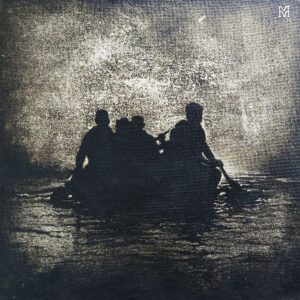
The word Corollary is defined as an aftermath, or a consequential result which naturally follows something else in natural course. As in the contest of art it can be the collation of professional artists who are the products of an institution who often share their “aesthetic ancestry”. That will look like a beautiful bunch of f lowers, a Gregorian choir chanting the hymns in the dark depths of a cathedral. However, one should be aware of the repetitiousness of singularity. Bouquets and laurels with multiple f lowers are often preferred.
Imagine a plant blooming multiple f lowers in it, or a mythical Speaking tree f lowering semi divine figures prophesying, arguing, and narrating their stories. Those will be atypical corollaries which are the unanticipated consequences or results. Like different timbre of the identical symphony. In the context of art education, an atypical corollary could be that allowing students more freedom and autonomy in their creative process which would result in higher levels of motivation and engagement, leading to innovative creative quests.
Directly or indirectly art schools do indoctrinate certain ideals in the students which they cherish even in their professional career. These ideals can be that of individual convictions or may be the language of creativity. In many instances they pursue different languages of expression but collective core values of the alma mater are common to them. One can perceive this multipart characteristic in the works of Baroda school alumnus.
The pioneers who contributed to the establishment of the Faculty of Fine Arts, at Baroda has been mindful of this bringing in reputed pedagogues from the existing art institutions which did not creatively converse in the same language. Practitioners of prominent art styles were welcomed with the caution of restrain on dominance. KG Subramanyan says about the education plan in Baroda, “There are a few things that could have been thought of when the Arts Department was started in the University of Baroda. Apart from Shantiniketan, no other university had an art college at that time. There was no chance of an art college of the Santiniketan nature in Baroda, because Santiniketan was a university with a utopian character but Baroda University is not like that. You may be wondering how to start your academic career in such a university. Changes according to the situation may also come up for discussion. The artists who come out here should be those who understand the society and engage with the times but also understand the external influences with analytical intelligence.
This is what the Faculty of Fine Arts wanted to provide to the students in Baroda by combining two types of educational frameworks. One is the formality of American arts schools and the ashram-like informality of Santiniketan”. It remains the hallmark of the Baroda School of Art even today. Along with KG Subramanyan and Sankho Chaudhary from Shantiniketan was NS Bendre who studied art at Bombay’s JJ School. He did not impose the methods he learned on his colleagues or students. Ratan Parimoo, Bendre’s student, observes about Bendre’s teaching style,
“Bendre saab will be right in the studio with us drawing his pictures, reviewing our every move, but never did he try to influence our art. He gave priority to the artist’s individuality and freedom of expression”. Rather, Bendre with young colleagues like Shankho Chaudhary and Subramanyan, pioneered a curriculum that incorporated the curricula of the Bombay School and Santiniketan. It was time to say goodbye to colonial curricula and incorporate the welcoming aspects of Western culture into the curriculum without compromising on Indian artistic concepts. Emphasizing on the psychological development of the students rather than technical knowledge, the pioneers of Baroda school realized the greatness of introducing all the arts to the students. Bendre kept his distance from the students as a senior teacher, but Shankho Chaudhary, who stepped into the position left by Pradosh Das Gupta in the sculpture department, did not.
Possessing a personality brimming with spontaneous energy, Shankho Da gave priority to the holistic development of students over the curriculum. The informality in the teacher-student relationship that later became the hallmark of the Baroda faculty can be attributed to Sankho Chaudhary. KG Subramanyan was a perfect example of how an art teacher should be as he had an open mind to embrace and analyze all art forms and styles and a keen intellect to know not only the technique of art but also the philosophy behind it. A guide who patiently listens to the questions and problems of the students, he was always willing to impart his knowledge on various subjects to his disciples. Many of his students still remember the lectures “Mani Sir” used to give on Saturdays at the Baroda Faculty. The interesting part of this experience was, that the lectures had the informality and Mani Sir will talk on any subject which suited him on that day. One week it will be on tribal art of Bastar and the next week it can be about Rasa theory by Bharata or on third week on Quattrocento paintings.
When we read his key books like Moving Focus, Living Tradition, Creative Circuit and Mag ic of Making, we can recognize the extent of his vision. Subramanian chose multiple mediums for his creative pursuit as divergent as terracotta/cement murals, reverse glass painting, print making and book illustration with ease along with his unique style of oil painting.
Well aware of the Western-Eastern styles and a deep knowledge of Indian world arts and crafts, he imparted a broad perspective to his students. It goes without saying that the pioneering generation of art teachers, their students and later colleagues, strove to make the progressive curricula and informality of teacher-student relations pioneered by Shankho Chaudhary and KG Subramanyan, probably the most cherished character of the institution. They followed the art style of Baroda by understanding the essence of Western and Eastern styles and integrating the unique styles of India with them. One has to only compare works by Baroda alumnus to understand the diversity of Baroda’s art curriculum and the resultant innovations.
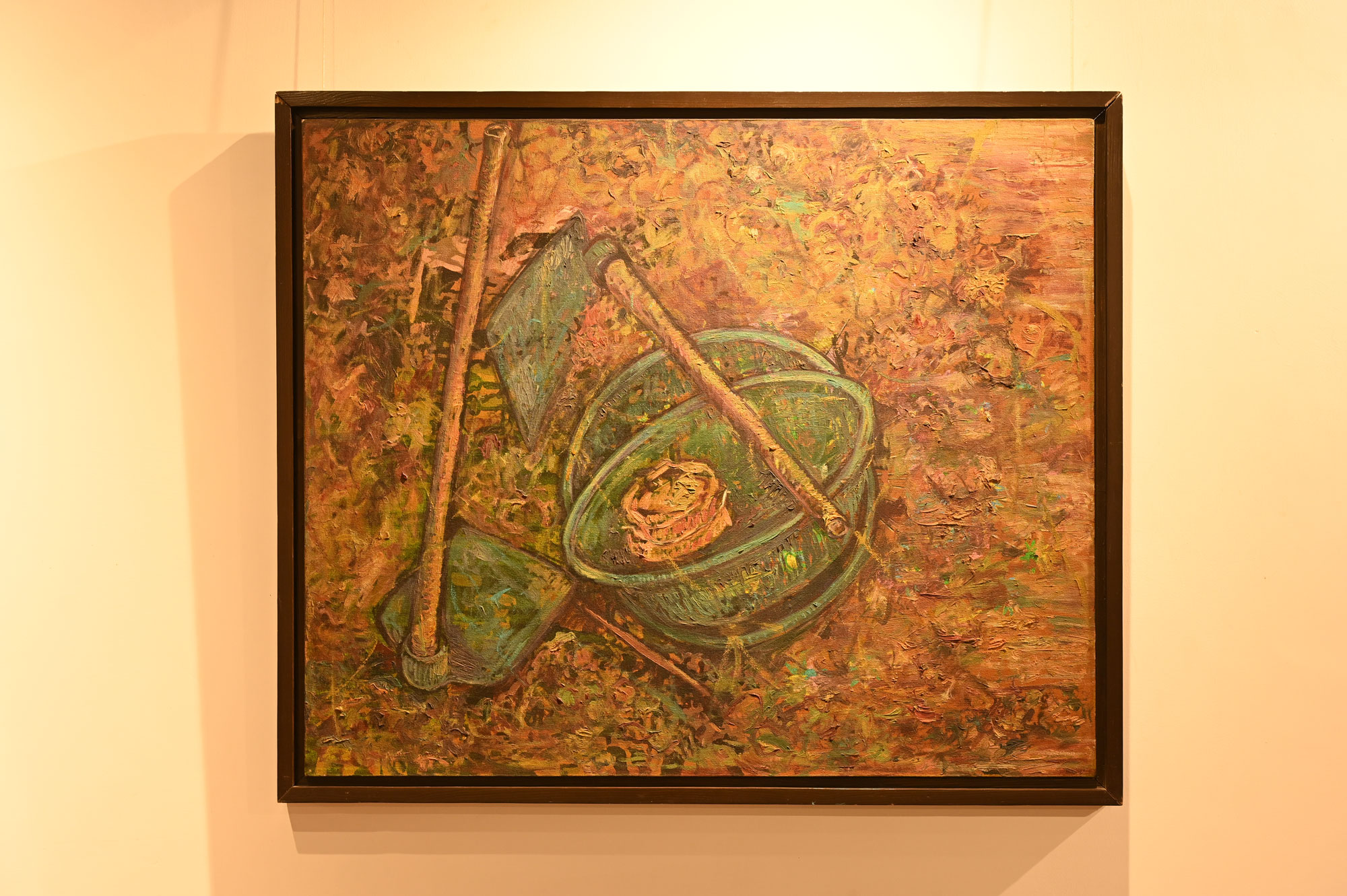
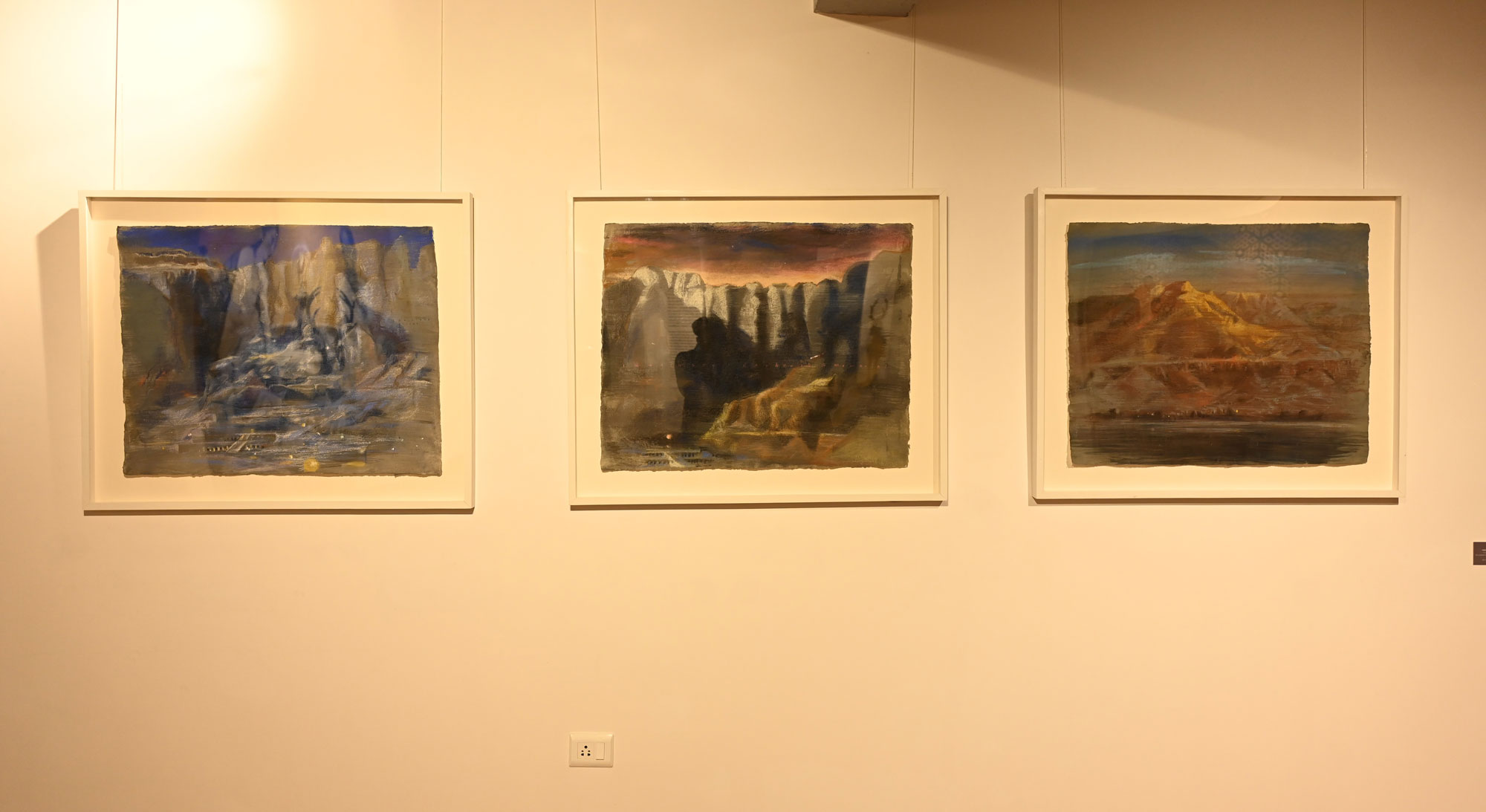
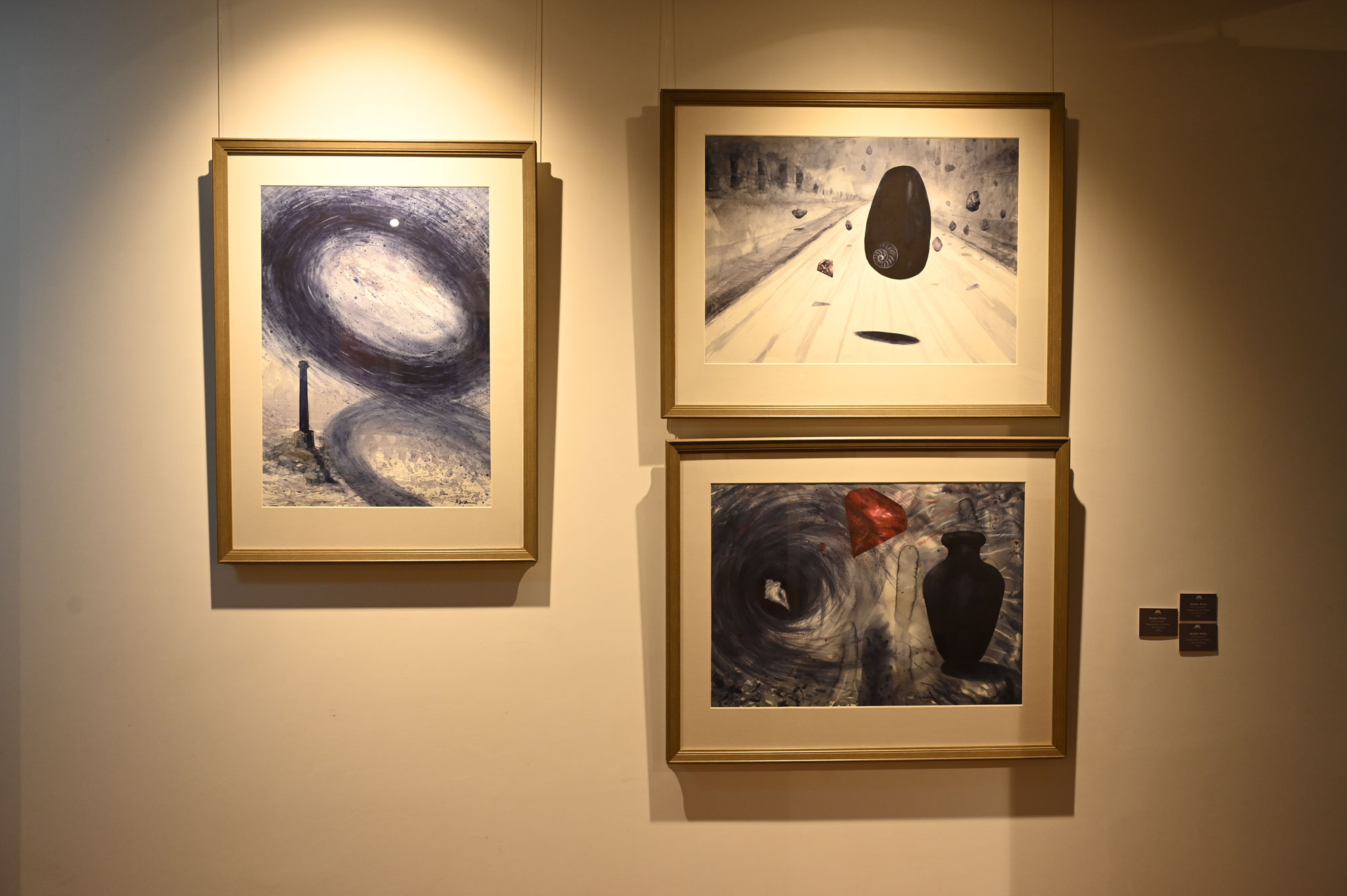
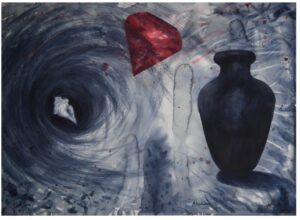
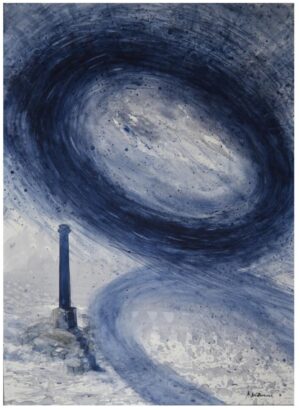
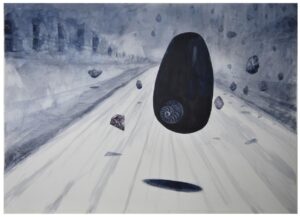
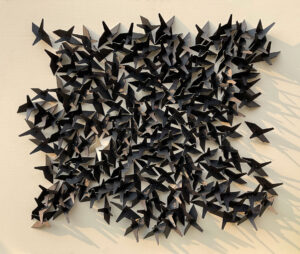
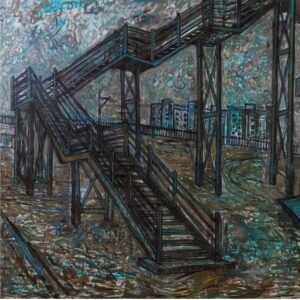
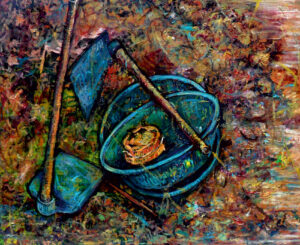
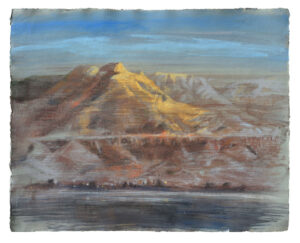
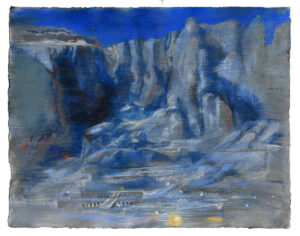
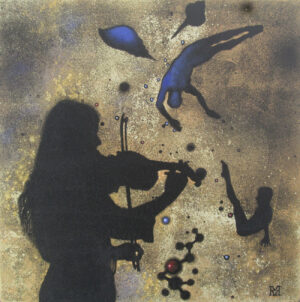
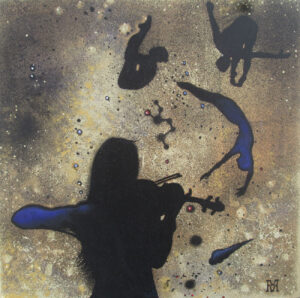
This diversity or atypical corollary continued even after the first and second generation of artists who shared their pedagogic association with the Faculty of Fine Arts. The present exhibition titled Atypical Corollaries showcases a cross section of artists who studied at Baroda from the time period between late 198o’s to early 2020’s. The group includes INDRAPROMIT ROY, APURVA DESAI, SRIDHAR MURTHY, JAGANNATHA MAHAPATRA, MANOJ VYLOOR, SATRUGHAN THAKUR, DUSHYANT PATEL, MAITREYI DESAI and ANUSHREE RABADIYA. Most of the artists in the current group came to Baroda to pursue post-graduation after completing their basic training from various art schools like Santiniketan as in case of Indrapromit Roy and Jagannatha Mahapatra, while Manoj Vyloor came to Baroda from Government Art College, Thiruvananthapuram and Sridhar Murthy from Chitrakala Parishad at Bangalore. Apurva Desai and Dushyant Patel joined Baroda after the completion of their graduation from CN Vidyalaya, Ahmedabad. Satrughan Thakur, Maitreyi Desai and Anushree Rabadiya did pursue their undergraduate and post graduate courses from Baroda. All of them including the curator know each other as a batch mate, senior/junior student, colleague, professional and have shared many memories in the campus like sipping chai together in faculty canteen or attending the openings of exhibitions or even exhibiting together and dancing garba during the Navratri festival. This common ancestry do not bind them to one aesthetic concern and expression but plurality of discussion take them to create multiple expressions. The concerns of urban and rural spaces become the concern for Indrapromit and Jagannatha, Sridhar explore the metaphysical realms of space and nature.
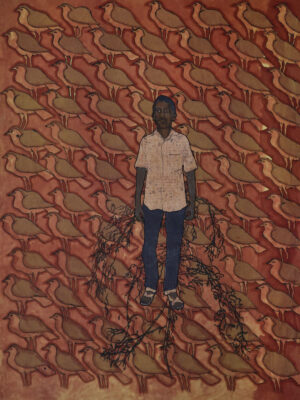
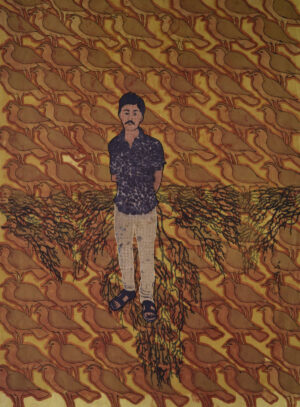
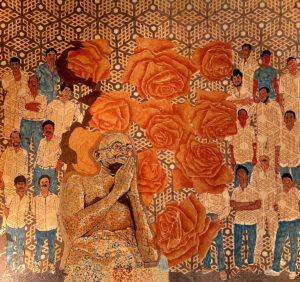
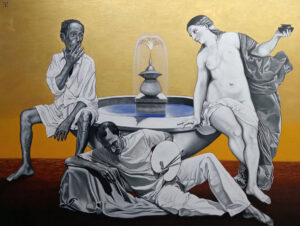
While Anushree Rabadiya challenges herself to reorganize the physical nature with geometrical precision Maitreyi visualizes the dreamscapes through patterns of emotion. Satrughan peeps into the struggles of labor using Khadi as the material with the laborers as the protagonists. When Dushyant strives to find happiness in the de-humanized landscapes Apurva probes into the human toil in those landscapes. The subversive reality is the concern of Manoj Vyloor when he places the hired laborer next to the sacred Venus of Titian. The placement of profanity next to the sacred or composing the grotesque contrasting the beauty and subverting it is concern shared by Manoj, Indro, Jagannatha and Satrughan.
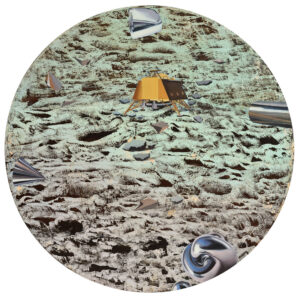
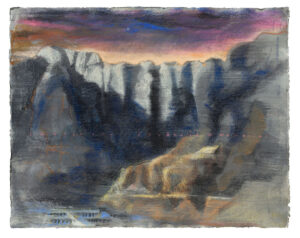
The barren but enchanting surfaces of Sun and Moon gets littered by the mechanical waste in Jagannatha’s canvas when Indrapromit illuminates the unchallenged glory of nature looming over the monumentality of ancient Egypt making it miniscule in comparison. What is pertinent here is the divergence of their language keeping the pedagogical ancestry not adhering to a singular aesthetic ancestry.
Occasionally they look back to the pioneers who initiated the incongruousness of perception of the surroundings but initiate individual language, unalike narrations like the semi- divine figures of the mythical speaking tree, a Creative Collation of ATYPICAL COROLLARIES.